Branding
Human + AI: The Future of Product Design
The most useful future is not humans versus AI. It is a collaborative model where machine intelligence handles scale and speed while people provide judgment, empathy, and direction.
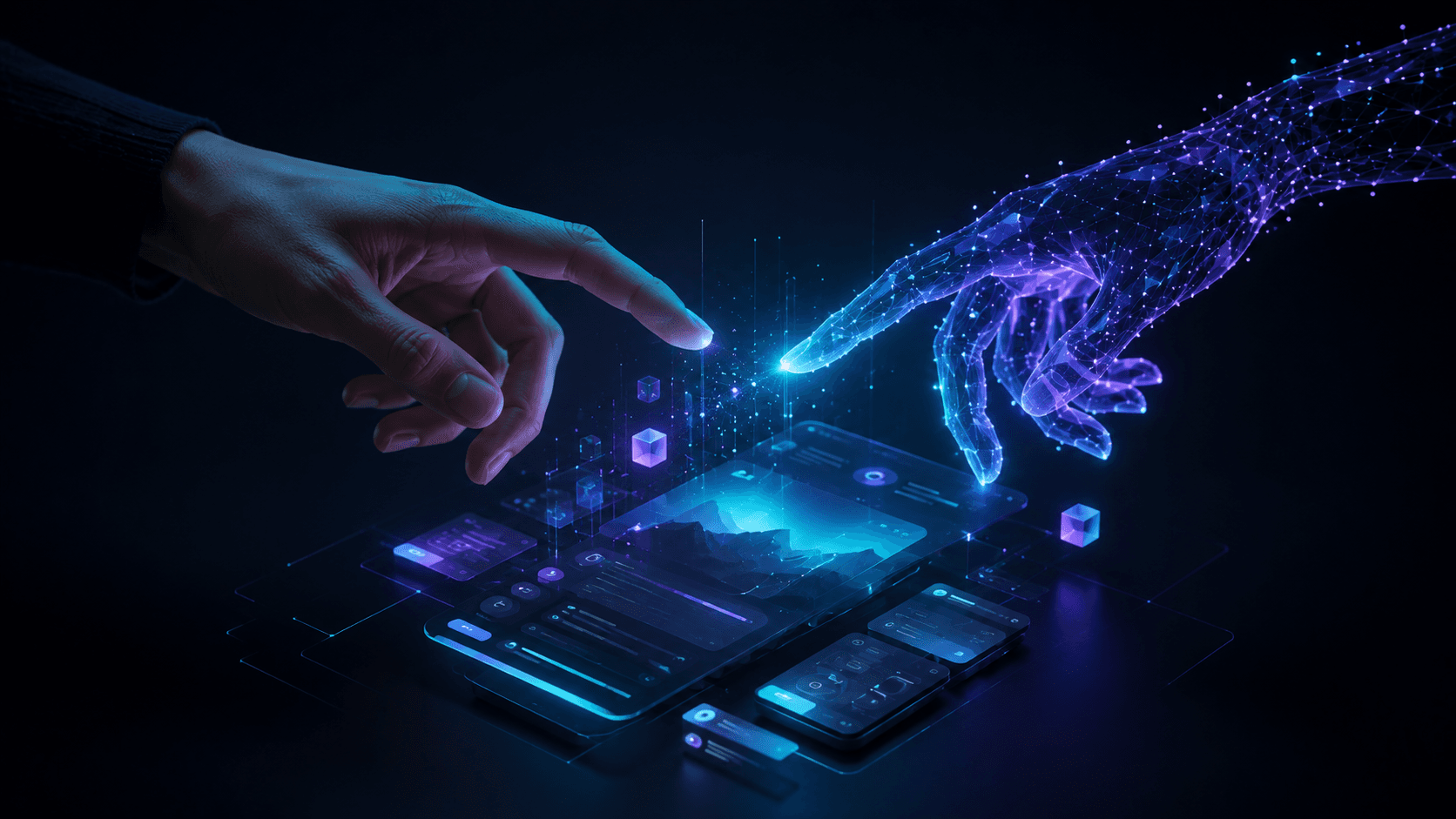
Much of the conversation around AI and design is framed as a competition: will AI replace designers, or will designers simply use AI as another tool? The more interesting possibility is that product design becomes a collaborative discipline shared between human judgment and machine capability.
AI is exceptionally good at scale. It can generate variations, process large amounts of information, identify patterns, transform content, and produce working artifacts quickly. Humans remain better suited to understanding context, navigating ambiguity, empathizing with people, and making decisions when the answer is not obvious.
That division of strengths can create a powerful workflow. AI can widen the range of possibilities while designers narrow it through judgment. AI can surface patterns while researchers investigate their meaning. AI can produce a prototype while designers decide whether the interaction actually makes sense.
The interface itself may also evolve. Instead of every product requiring users to navigate a fixed set of screens, some experiences will increasingly adapt to intent and context. This does not mean traditional interfaces disappear. It means interfaces may become more flexible and personalized.
For designers, this makes product thinking more important than ever. The question is no longer only “What screen should we design?” It becomes “What should the system do, what should the user control, and how should the relationship between the two feel?”
The future of product design is unlikely to be completely automated or completely manual. It will be shaped by teams that understand how to combine human creativity and responsibility with machine speed and intelligence.